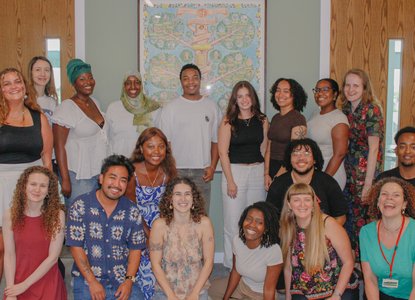
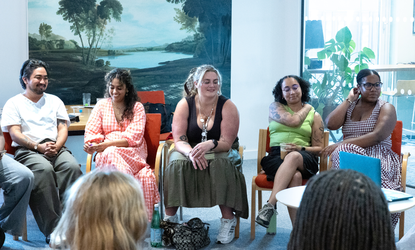
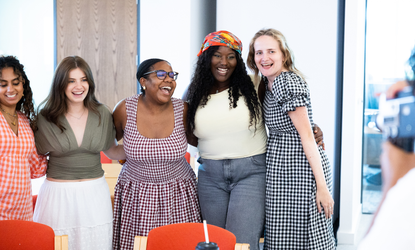
Louise Chandler from our Involving Young People Collective shares her reflections from the co-design process for the Youth-Led Creativity Fund and what it taught her about power, responsibility and youth-leadership.
Nine months ago, I was more familiar with being on the other side of funding, as a young person taking part in organisations and projects supported by funders such as Esmée Fairbairn Foundation. I had seen the difference that funding could make in bringing ideas and dreams to life and creating change in communities but had never properly considered what it meant to shape those decisions or to hold both power and responsibility in the process. As part of the Involving Young People Collective (IYPC) I worked with Esmée to co-design the Youth-Led Creativity Fund, which will support arts and culture organisations based and working in Scotland, Wales and/or Northern Ireland to deliver work led by, and for, young people who are underrepresented in arts and culture.
This blog reflects on what the process taught me about finding value in the messiness of co-design, learning to sit with the power and responsibility of funding decisions, embedding joy and care in tangible ways, and drawing on the knowledge and support of other young people.
Giving time to co-design: Finding value in the messiness
The process taught me the importance of giving time to co-design and making peace with the fact that everything takes longer than we might initially expect. Co-design cannot simply be squeezed into existing systems; it needs the time and space to reshape and challenge those systems. Time allows us to stay with what is so often dismissed as messy. Rather than rushing past the difficult parts, I learnt to sit with them. This has helped me recognise multiple forms of knowledge and value different perspectives, holding onto nuance rather than forcing agreement before it's ready.
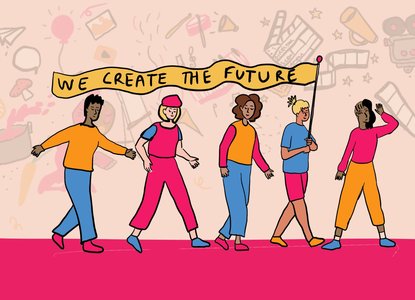
Giving co-design enough time created the conditions for our vision and process to inform and challenge each other. Too often, visioning is treated as the ‘blue-sky’ stage, where thinking can be open and imaginative, while process is seen as the practical and structured work that follows. We collectively imagined our hopes for the fund, drew the change we wanted it to create in the world, and wrote our manifesto. We kept returning to these throughout the process, using them as tools to challenge our decisions and ask whether our work still reflected what we had set out to achieve. These tools were used to keep testing our decisions against.
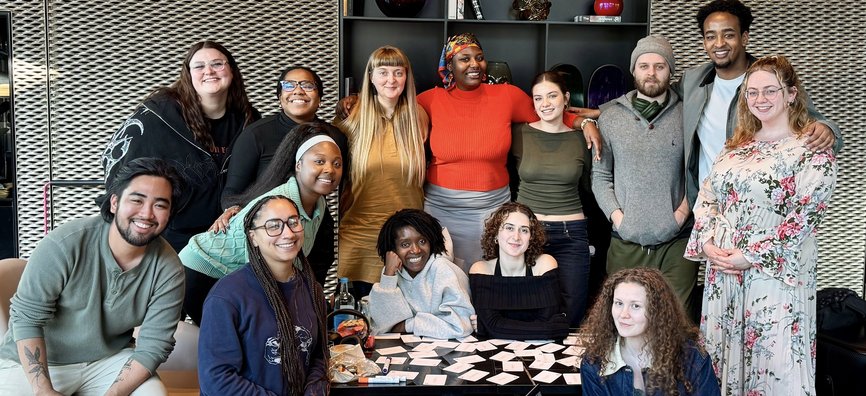
Making time also allowed us to embed joy and care into the process by creating space for connection, creativity and reflection. We held creative reflection and gratitude circles, where we highlighted each other's contributions, connected as people through icebreakers and marked the end of the process with a ceremony that celebrated what we had created together.
Rethinking what ‘youth-led’ means: Involving the village
Originally, we tried to define what ‘youth-led’ should mean in simple terms that were easy to interpret. We imagined it as a full shift of responsibility and power into the hands of young people, with others stepping away from the process. This definition felt easy to communicate and direct.
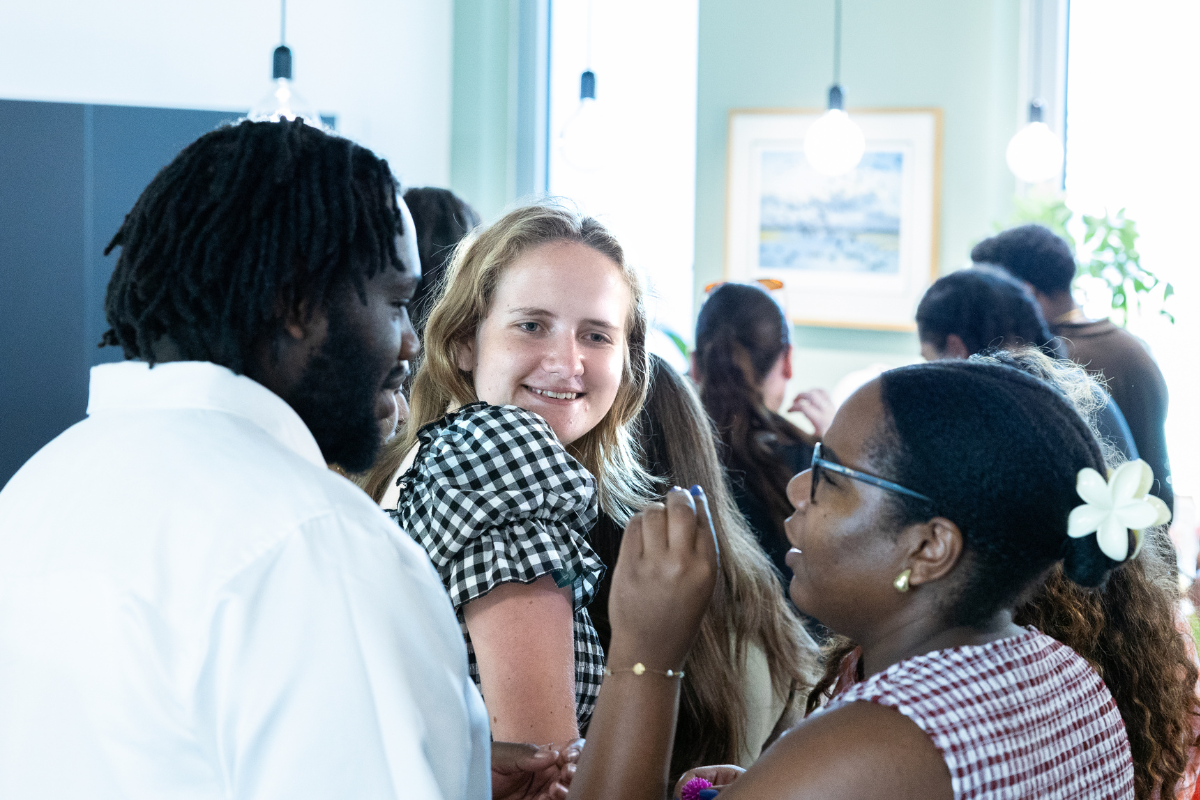
By sitting with the messiness and making room for nuance, we realised that our original definition was too simplistic. Youth-led work did not mean that everybody else had to step away. Instead, it felt more important to think about intergenerational working and how leadership is held within systems and shaped by the context in which it exists. This is where the idea of a ‘village’ became useful. A village cannot function through one group of people alone; it needs many villagers who bring different forms of knowledge: some who actively lead, while others hold and support the work more quietly; some who bring historical knowledge and others who bring new perspectives. Importantly, it is about intentionally questioning where power is held and finding ways to redistribute that power.
Youth leadership felt less like a complete transfer of responsibility and more like something that shifts depending on context and is strengthened through intergenerational collaboration. Young people are not separate from the communities around them, just as wider communities are not separate from youth-led work. We began to see leadership as something that emerges through time, creativity, joy, and relationships.
A seat at the table: holding power… and responsibility
Having previously participated in projects supported by funders, moving into designing a fund made me reflect differently on power. Our choices would affect which organisations and communities received support and whether young people could see their ideas and dreams brought to life. There was something incredibly powerful about having our lived experience and knowledge as young people trusted and valued. We could shape decisions affecting communities like ours and contribute to some of the change we believed were needed in how funds are designed.
I came into the process carrying a frustration that many organisations were already doing incredible work, often with little or no funding, because their work did not fit within existing criteria or expectations. Being given the power to co-design a fund meant taking responsibility for doing everything in our power to avoid reproducing those barriers. I have become increasingly aware that funding decisions are not neutral. The criteria we create, the language we use to describe things, the communications and information we share, and the application process all influence whose work is recognised as valuable and who applies. Power exists in every part of the process.
At times, I questioned whether I had enough knowledge or experience to make the ‘right’ decisions. I learnt not to push that feeling aside, but to let it remind me of the consequences of our choices and the importance of continuing to question ourselves and our assumptions. At the same time, I became more comfortable with not having all the answers and learnt to lean on the collective knowledge and lived experience of the group.
Fewer answers, better questions: what I am taking with me
Co-design requires bravery: the willingness to create something without knowing exactly where it will lead. Its power comes from making room for uncertainty and holding the messiness for longer than expected. I have learnt that holding power is not about having all the answers, but about asking better questions, examining our assumptions and making space for what we do not yet know.
About Louise
Louise Chandler joined Esmée’s Involving Young People Collective in June 2025. Outside of IYPC, she leads public involvement and engagement for a research study co-producing an online arts and culture platform that supports the mental health of underrepresented young people. She also runs an online platform reaching millions of autistic people every month, campaigning for a world that works for neurodivergent people through accessible, neuro-affirming resources, amplifying lived experiences and pushing for systemic change.