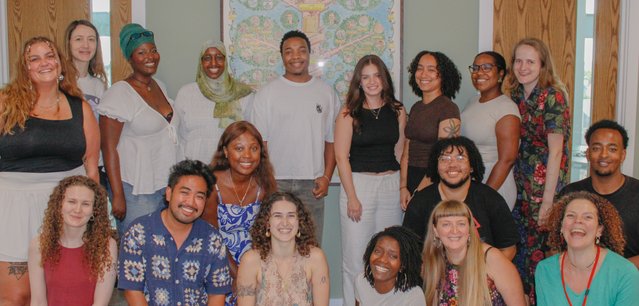
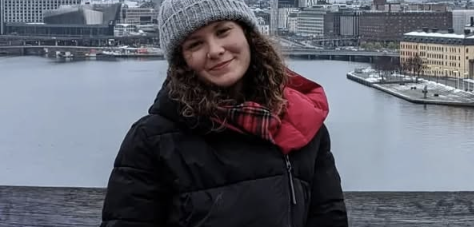
Daniel Mapatac from Esmée’s Involving Young People Collective (IYPC) shares his reflections on the impact ‘holding power’ as a young consultant has had on him and why shifting power to young people is important for creating long-term systems change.
"I don’t think it’s for me”
I still remember saying that to my partner before my interview for the Involving Young People Collective, three years ago.
At the time, I knew nothing about funding or grant-making - let alone what the Esmée Fairbairn Foundation was, or what it actually did. Funding felt like a distant world, technical, and honestly, not a space for “someone like me”. I cared about youth-led change, activism and justice, not spreadsheets or strategy papers (as I originally thought).
So, when I applied, it felt like a long shot. Something interesting, but not fully for me.
Three years later, I now work on the Young Gamechangers Fund, supporting young people to create change in their communities and to say my experience in the IYPC and Esmée Fairbairn Foundation influenced that journey would be an understatement.
Entering the Collective: confusion before clarity!
When I first joined the IYPC, I was confused.
Fellow Collective members who’d already been involved for a while spoke a lot about care, joy and values. Those words were everywhere - in meetings, in our reflections and in our decisions. But at the time, I couldn’t entirely see how they were tangibly linked to the “work”. I was used to environments where impact meant outputs, deadlines, and deliverables. Care and joy felt like abstract concepts that were optional.
I also didn’t fully understand what people meant by power. “Shifting power” sounded good - but vague. Who was giving up power? Who was receiving it? And what did it actually change beyond the room we were in?
Looking back, that confusion was a major starting point.
What shifted?
The biggest shift for me was realising that how decisions are made is a key part of the work.
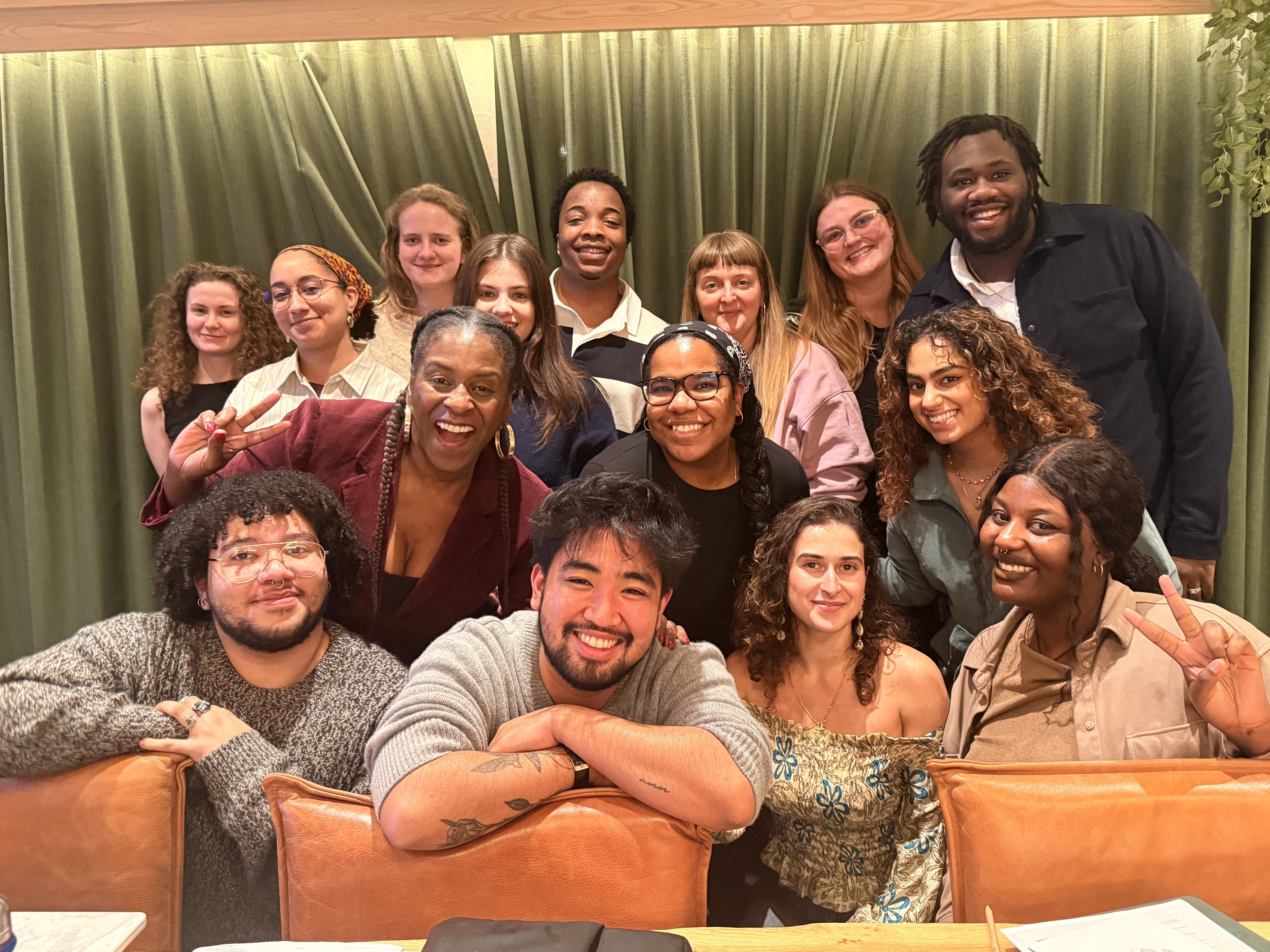
The IYPC wasn’t just advising on funding, but we were practising different ways of holding power. As young people, we weren’t just there to give a stamp of approval on decisions already made or offer our lived experiences as decorations. We were trusted to shape priorities, to challenge assumptions, and make decisions that had real consequences. AND where care and joy weren’t distractions from impact, but formed the conditions for it.
Care looked like:
- Starting meetings by actually checking in on each other and being able to answer honestly.
- Slowing things down when something didn’t sit right, even if that menat not sticking perfectly to the agenda.
- Retreats and away days that weren’t just strategy marathons. We ate well, we laughed together, we went on walks, we took the time to build relationships with each other - remembering we’re young people, not just decision-makers.
Joy looked like:
- The moment of realising, “wait, we actually get to decide this!”
- Backing something bold and new and feeling the collective “yes” in the room.
- Feeling proud of not just what we funded, but how we worked together during the process.
I saw what happens when young people are resourced properly:
- When time is taken to build trust
- When learning is valued over perfection
- When disagreement is welcomed rather than managed away
The power moved, and once you experience that shift, it’s so clear to see when it’s missing.
What did I learn?
I learned that funding isn’t neutral. Every decision - what gets funded, who applies, how risk is defined - reflects values. Being part of the IYPC helped me see grant-making as a political and relational practice, not just a technical one.
I also learned that young people don’t need to be “ready” to hold power, but we become ready by being trusted with it.
That learning has really stuck with me and shapes how I think about participation, leadership and accountability, ESPECIALLY in youth-led spaces.
How did I grow?
Today, I work as a Youth Power Coordinator, shifting power to young people is now central to my role, and I draw directly on my experiences with the IYPC:
- Designing processes that are accessible and transparent,
- Holding spaces for uncertainty and learning,
- Resisting the urge to over-professionalise young people’s activism,
- Remembering that joy, rest and care are not nice “add-ons” but are strategies to make sure our work is sustainable.
Importantly, I’ve grown in my confidence. Confidence that I belong in funding spaces. Confidence to question systems that weren’t built with young people in mind. And confidence to imagine alternatives - because I’ve already seen them work.
Looking back
Three years ago, I didn’t think it was for me.
Now, I know that spaces like the IYPC don’t just change funding, but change people.
It changed how I understand power, how I work with young people and how I show up in movements for change. And whilst that might be an impact that is not so easily measured, it is one of the greatest opportunities that I’ve been involved with that has impacted my journey for the long-term.
If you’re a young person reading this and thinking “I don’t think it’s for me” - I’ve been there. You don't need to understand funding to belong in this space. You don’t need the right language, or the perfect answers.
What matters is your perspective and your willingness to question how things are done. Spaces like the IYPC show what’s possible when young people are trusted with real power, and once you experience that, it can shape everything that comes next.
For funders and organisations, the IYPC is a great example of shifting power that is not symbolic, but practical.
It requires time, trust and a willingness to let go of control. But when young people are genuinely resourced to lead, the impact goes far beyond a single fund or programme - it changes how people understand power, accountability and what “good” work looks like.
If we want long-term systems change, we need to keep creating (and protecting) spaces where young people don’t just participate, but hold power to decide.