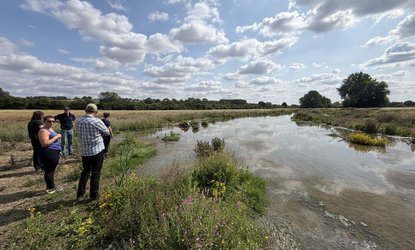
Across the UK, communities, farmers and charities are showing nature recovery is possible, and it has benefits for food security, local economies and climate resilience. However, systemic barriers are holding back progress. Esmée's new Space for Nature report by 3KQ calls for greater and sustained investment to create lasting change.
Despite systemic challenges, Esmée Fairbairn Foundation says green shoots of nature recovery are being spurred by innovative new approaches across the UK. Its new Space for Nature report shows how nature recovery can help food production, local economies and climate resilience when people have the resources, tools and power to act. But nature recovery cannot rely on flashes of “fairy dust” in individual places, the report’s contributors also say.
After a summer when nature-rich landscapes were wrongly blamed for feeding wildfires, the Foundation’s report says misleading narratives are just one of the challenges nature faces, and that a new delivery mindset is needed to rescue nature from the “intensive care unit”.
Philanthropic funding and social investment play a key role. They can provide support to early-stage ideas, enable experimentation and help promising approaches build the evidence needed to attract wider backing, says Esmée’s nature director Liam McAleese – against a backdrop of deep-rooted problems with food systems and a highly challenging wider funding picture.
“Nature remains in the intensive care unit here in the UK,” says McAleese. “Despite a solid legal framework and huge efforts from the sector, we remain one of the world’s most nature-depleted countries. The challenges run deep – from lack of investment when we know that nature underpins our economy, to government schemes taking too long to make a positive difference on the ground.
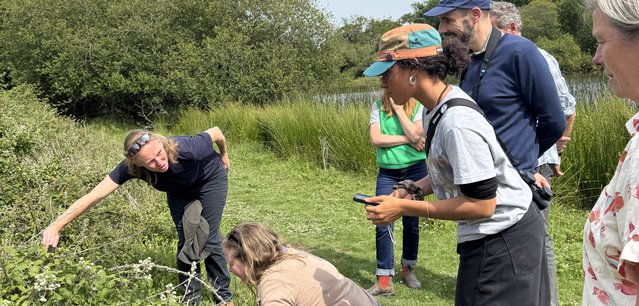
“And yet targeted and creative interventions can quickly lead to results, from peatland restoration that provides buffers to wildfires to farmer led initiatives that help restore nature and improve water quality. We need to give the people and organisations leading this work the resources and tools to deliver, while ensuring local communities can shape and benefit from nature recovery.”
Esmée’s report demonstrates the transformative impact of £37.7m invested in innovative projects across the UK and points to growing evidence that community-led approaches can help reverse nature loss while creating wider social and economic benefits.
Scottish Environment Link CEO, Deborah Long, said: “The use of flexible funding, pioneering support and land and sea scape approaches can sometimes feel like fairy dust – the effects can be truly magical for nature recovery in specific locations and communities. But nature recovery cannot rely on flashes of success in individual, separate places and a much more strategic spatial approach is needed. For that, public funding remains inadequate and philanthropic funds cannot plug the gap. Land managers and environmentalists alike are urging the Government to consider significantly increasing the budget as part of the Spending Review in England and upcoming budget in Scotland.”
Danny Renton, Seawilding’s CEO and Co-founder said: "Our project draws its strength from community roots - we're showing that coastal communities care about the declining health of our seas, they want to reverse it and to be involved. The reward is not just increased marine bio-diversity, but also ‘green’ jobs, a sense of purpose and well-being, and new socio-economic opportunity for a remote community like ours".
Speaking about the role of farmers and collaboration, Becky Lockhart from Breckland Farmers Wildlife Network said: “Farmers have a vital role in nature recovery, alongside producing the food we all depend on. At Breckland Farmers Wildlife Network, we see how bringing farmers together builds confidence, encourages the sharing of ideas and helps connect habitats across farm boundaries.
“That collaboration takes time and trust, supported by practical advice and an understanding of each farm. Farmers need to be involved from the outset, so that plans draw on their knowledge of the land and work in practice. Working together gives us the opportunity to achieve much more for nature across the wider landscape.”
McAleese added: “Successful approaches exist. However, much greater and more sustained investment is now needed to scale them. Government, private capital and philanthropy must work with communities and organisation at the forefront of nature restoration. They are proving that nature doesn’t just benefit wildlife, it benefits us all - helping to mitigate and adapt to weather extremes, provide food security, and support economic growth.”
About 3KQ
3KQ are independent facilitators and evaluators specialising in complex and sensitive issues in the environmental field. We help organisations have better conversations with their stakeholders – so better decisions get made.