How does a new museum build trust and connection with communities and place people at the heart of its decision making before opening its doors? We asked the Migration Museum to share how they developed a People’s Panel to embed local voices directly into the creation of their new, permanent home.
The Migration Museum is the UK’s only museum dedicated to exploring how the movement of people to and from Britain across the ages has made us who we are – as individuals, communities and nations. Over the last decade, in temporary locations in London and pop-ups across the country, we have staged interactive, story-led exhibitions and events, alongside high-profile digital campaigns. Our award-winning learning programme has reached thousands of students each year and many more across the country via teacher training and partnerships. And our Migration Network, a dynamic, knowledge-sharing initiative, convenes museums, heritage organisations, charities, academics and campaign groups working on themes of migration.
We now have a once-in-a-generation chance to create a permanent Migration Museum, in the heart of the City of London, opening in 2028. Our vision is to establish a permanent cultural institution that uses its platform to reshape the conversation around migration, putting people's stories and voices at the centre. Our ambition is to create a museum that connects, represents, surprises and delights, where people feel genuine ownership and see their own experiences reflected.
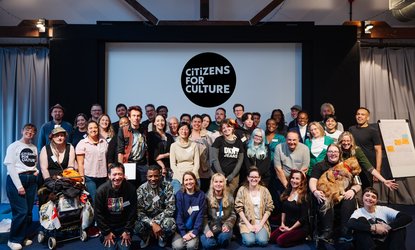
© Migration Museum (Photo: Elzbieta Piekacz)
Our People’s Panel: co-creating a museum
As well as building a permanent home, we are developing long-term, collaborative relationships to ensure that local people shape every aspect of the Museum: from the design of physical spaces to programming, events and the stories we platform.
Our People’s Panel is a group of over 50 community-minded individuals with connections to our new home borough of the City of London, neighbouring Tower Hamlets, and Lewisham, our previous home. They act as critical friends and co-creators, working alongside us as we develop our strategy. We believe this approach will help us build a different kind of museum – one where shared decision-making is not an add-on, but a foundation, and where people have the power to take action and work together for change.
This approach builds on our previous community engagement work, including our first People’s Panel in Lewisham (2022-3) who created a toolkit for co-created community engagement projects.
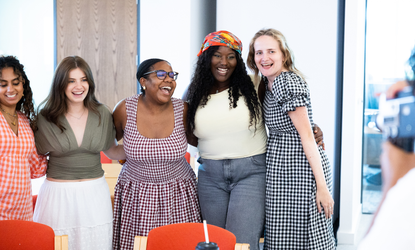
© Migration Museum (Photo: Elzbieta Piekacz)
Sharing power strengthens institutions and communities
Co-creation with communities can also be a way for more established organisations to shift away from traditional, hierarchical forms of decision-making and engagement. By embedding inclusive, participatory practices, we can help to dismantle existing structures that exclude or reduce engagement from underrepresented or unheard communities, bringing people together to strengthen our communities.
The Migration Museum exists because of people's stories, which help audiences connect with complex topics on an emotional and human level. That work is only possible through meaningful co-production with the communities we work with.
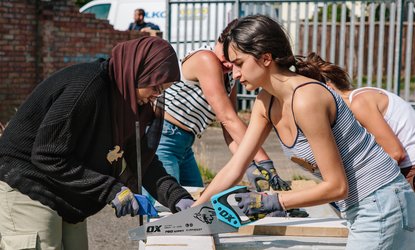
© Migration Museum (Photo: Elzbieta Piekacz)
Rethinking recruitment and building relationships
Long before recruitment began, we have been building relationships with local community groups in Lewisham, and more recently in Tower Hamlets and the City of London, listening to and responding to their needs. We only promoted the People’s Panel after they got to know us, what we do, and why we’re interested in working with them.
The recruitment involved a simple online form with key questions – designed to invite participation rather than filter people out. We wanted to learn more about our applicants – their life stories, their connections to local communities and projects, what they’re passionate about, how this project speaks to them and what they’d get out of it.
In our selection, we considered group dynamics, balance and diversity of lived experience, interest in the project itself and applicants’ engagement within their communities – for example, involvement in work with young people, the creative arts, refugee/migrant support services, housing/homelessness, ESOL, accessibility, caring, community gardening or environmental.
What’s needed to embed co-creation
With our new home, we’re able to establish ourselves with the guidance and support of the communities around us. We are privileged to be able to start as we mean to go on.
We know that not every museum or cultural organisation is in the same position. Many are re-building trust as conversations around colonial collections are being reframed. At a time when conversations about migration can be divisive, we believe museums have a responsibility to create thoughtful, inclusive spaces where complex histories and contemporary realities can be explored with care, honesty and humanity.
Moving to a more inclusive and participatory decision-making model can be a significant shift for established institutions. Democratic approaches take time, and whilst the process can be challenging, the outcomes are almost always richer, more relevant and more exciting.
Six things to keep in mind:
- Budget: ensure that you have enough resources to compensate people for their time. Travel and lunch expenses are not enough! Treat this as freelance work engagement.
- Capacity: consistent communication and care for your group is so important – and can only be achieved with enough staff time. Make sure there isn’t a bottleneck in the organisation, or that community members are only connected to you – they should feel part of the team and know more than one person in the organisation. Connect them with others – this can help bring them into other activities too.
- Time: plan ahead, set up lots of initial intros with groups you’re looking to engage, build up relationships long-term, even before beginning recruitment.
- Clarity: set boundaries in terms of what can be achieved, but bring openness and flexibility to structure and delivery.
- Flexibility: things may not go the way you expect – remember that this is a learning process for everyone involved.
- Openness: be honest about your organisation and the challenges you face. You’re not there to ‘market’ your organisation, but help change it through critical thinking and constructive work.
Learn more
- Find out more about the Migration Museum
- Download our toolkit for co-created community engagement projects
- Join the Migration Network
You can find more resources on community engagement on Esmée’s useful sector resources page.
About the author
Mona Jamil is Head of Civic Engagement at the Migration Museum. She has been a part of the Migration Museum since 2016, and manages the museum’s volunteering and placement schemes, community engagement initiatives, and public engagement team. She has previously worked with people seeking sanctuary in a number of capacities, and was a trustee at Refugee Café. As the child of refugees, Mona is passionate about work that uplifts those that have been displaced.
Connection to Esmée’s strategy
- Priorities
- Long-term outcomes
- Local people and local artists lead creative and cultural activity in their communities.
- A collaborative approach to creativity and culture enables people to work together to strengthen their community
- Public understanding and discussion of migration issues is better informed, particularly by those with lived experience of the migration system.