Led by Finance Earth, the Big Nature Impact Fund (BNIF) is the UK’s first blended nature-as infrastructure fund. As they announce the first close, reaching a £64.6m, Sarah Hedley, Social Investment Manager at Esmée, reflects on why high-integrity funds like BNIF are important and how it sits within Esmée’s work to improve Our Natural World.
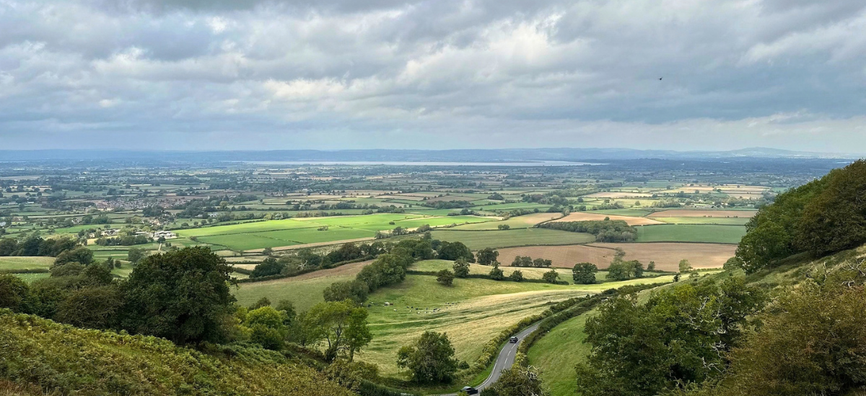
The Big Nature Impact Fund, is a new fund that will support the creation of new woodlands, restoration of peatland and improve biodiversity in England. Combining public and institutional investment, the Fund aims to raise a total of £90m to £120m to restore nature across England, whilst also delivering returns on investment through the sale of carbon credits and biodiversity units. We’re pleased to be a small investor in the first close, alongside Department for Environment Food and Rural Affairs (Defra), Zurich, Admiral and the Church of England’s Social Impact Investment Programme.
The nature crisis in the UK means that high-integrity funds like BNIF are important. The UK is one of the most nature-depleted countries in the world, and there is an enormous gap in the funding required to reverse that decline. Restoring nature at scale will need significant new sources of long-term investment alongside public funding and philanthropy. BNIF is an example of how the emergence of the Woodland Carbon Code, the Peatland Code, and biodiversity net gain can attract businesses and institutional investment to fund this work.
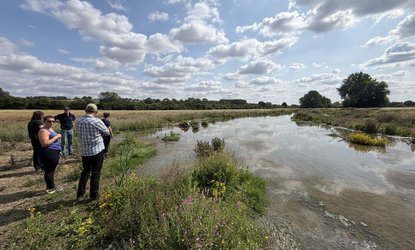
For us at Esmée, this investment builds on a wider set of grants and social investments we’ve been making to help UK nature markets develop in a way that delivers meaningful on-the-ground nature recovery. We supported pioneering early projects, such as the Wyre Natural Flood Management Project that is using interventions like leaky dams and tree planting to reduce flood risk for residents and businesses in Churchtown, Lancashire. We’ve supported research to better understand corporate appetite for taking action for nature in the UK and we’ve provided practical support via UK Nature Accelerator to help environmental NGOs to build a pipeline of investible projects. Alongside partners, we have also commissioned an independent review of voluntary carbon markets (to be published in June 2026) to help us understand the landscape and demand drivers for high integrity credits.
Developing UK nature markets
UK nature markets are developing fast, but they’re still young, complex and uncertain. There are ongoing challenges around policy clarity, demand uncertainty, access to good data, and the practical matters of navigating multiple schemes and standards. Our grants programme is supporting development of policy, market governance, standards and codes. Examples include our support to the Nature Markets Dialogue and Green Finance Institute.
If these markets are to deliver for nature and people at scale, continued effort will be needed to build confidence, strengthen integrity, and ensure that benefits are shared fairly with communities. We will continue to support these efforts through our grant-making and social investment, and we are excited to see the first projects emerge from BNIF and begin to deliver real benefits on the ground.
More information
- Read the press release about the Big Nature Impact Fund
- Learn more about the Big Nature Impact Fund and how to get involved
You may also be interested in a report by Iken Associates - High integrity voluntary carbon markets in the UK: An Assessment, which has helped deepen our understanding of the key dynamics shaping UK voluntary carbon markets today. Commissioned jointly the The Church of England Social Investment Programme, Unity Trust Bank, the The University of Edinburgh, and Esmée, we hope it’s a useful resource for others working in this space.