In this blog, Dr Claire Baker, a researcher focused on improving outcomes for care-experienced children and young adults, and Susan Lake, a disabled care‑experienced activist, share their reflections on new Government statistics about disabled children in care and disabled care leavers, and why these numbers are deeply personal to both.
Twenty‑one years of pushing for visibility
Claire: In 2005, I published findings from my PhD research on disabled children in the care system. Even then, one fact stood out starkly: we knew very little about disabled children in and leaving care. They were invisible in national data, largely missing from policy debates, and overlooked in research evidence. Since that time I’ve continued to write extensively to challenge invisibility.
Twenty‑one years later, I was pleased, to see the Government finally publish national statistics on disability among children in care and care leavers. For the first time, there is a dedicated statistical report shining a light on disabled care‑experienced young people. And what it shows is important.
What the new figures tell us
The statistics reveal for the first time, the proportion of children in care and care leavers with a recorded disability:
- More than 1 in 10 children looked after (11%) had a recorded disability, rising to 13% among care leavers aged 17–21 and 14% for those aged 22–25. If unaccompanied asylum-seeking children (UASC) are excluded, the proportion of care leavers with a recorded disability rises to 18% across both age groups.
The figures highlight different care journeys for disabled children and young people:
- Disabled children in care are less likely to be in foster care
- Like other children in care, their primary need for care is due to abuse or neglect
- They are more likely to be placed in children’s homes or secure settings
- They tend to live further from home
- Disabled care leavers have higher rates of being not in education, employment or training (NEET)
- Among care leavers with a recorded disability, learning disabilities were the most commonly recorded, followed by autism (36%) and ‘behaviour’ (32%).
These findings matter because what gets counted gets noticed.
Why this data is only the beginning
The new figures are a step forward, but they are not the full picture. Research I did with Coram Voice (2024) shows that young people self‑identify disability at far higher rates than professionals record. This suggests the Government’s statistics underreport disability among care‑experienced young people. There are variations between local authorities, inconsistent definitions, and evidence that many disabled care leavers struggle to access support.
Counting matters, but being heard matters more
Susan: For me, the statistics are damning. The figures are not abstract, they are incredibly relatable. I went into care as a neglected and abused disabled child, yet I was not recorded as disabled on social work paperwork, despite having a brain injury, autism and mental health conditions.
I was placed in a small children’s home where everyone had additional needs. I grew up around disability but never experienced a stable family relationship. In my experience, disabled children in care are not always offered the same access to basic needs as other young people; safety, belonging and stability are not guaranteed.
When I reached post‑16 education, I struggled and dropped out before my exams. With an EHCP and support from an advocate, I regained access to education. But luck should never be a factor in a disabled young person’s journey through and out of care.
These statistics validate experiences that have been overlooked in national data for decades. They show that disabled children in care and disabled care leavers can be at greater risk of experiencing isolation, instability and poorer outcomes, not because of who they are, but because systems have not always been designed with their strengths, identities and needs in mind.
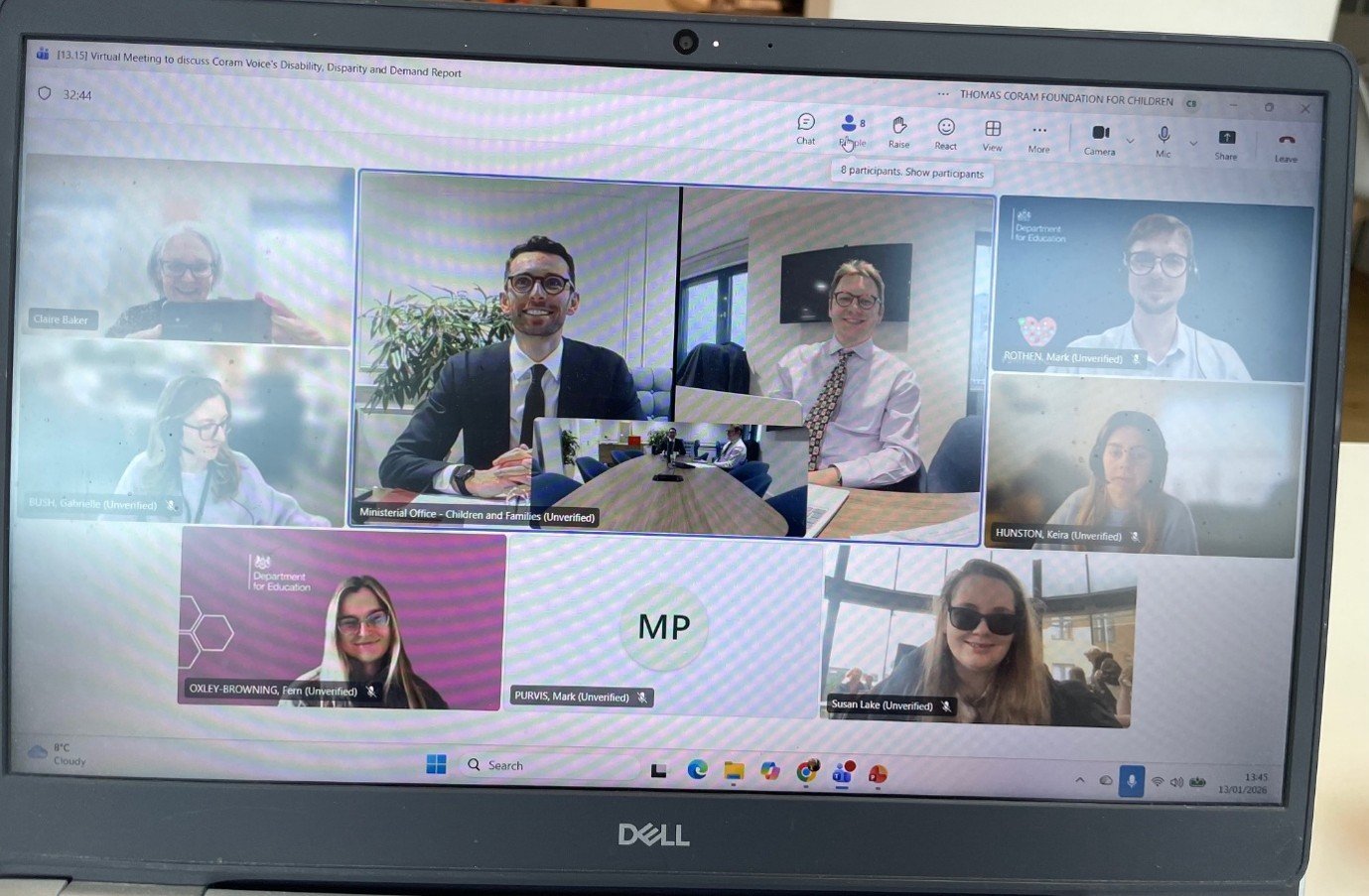
Photo of an online meeting Susan and Claire had with the Children's Minister, Josh MacAlister to discuss disability and care leaving
What we still need to happen
This new data shows that we can record vital information about young people for whom the Government acts as a “corporate parent”. But this is only the beginning.
We still need to improve the data we have on disabled care‑experienced young people so that:
- Children and care leavers’ voices are embedded in the data, not just professional recording
- Disability is identified, recorded and understood consistently
- Definitions align with the Equality Act 2010, recognising neurodiversity, mental health, long‑term conditions and invisible disabilities
- We build a better understanding of outcomes, transitions and well‑being
A quiet milestone and a call for more action
Claire and Susan: These statistics didn’t make headline news, but for those of us who have fought for visibility, they are significant. We celebrate and push for more.
We won’t be stopping now.
Together, we are working on an Esmée-funded project to raise awareness of disabled care experienced young people and highlight what is working well in this neglected area of policy and practice.
Interested to hear more? Sign up to receive updates on the project.
About Claire and Susan
Dr Claire Baker is a researcher, whose work focuses on improving outcomes for care experienced children and young adults.
Susan Lake is a disabled care experienced activist and postgraduate who campaigns for the rights and support of disabled young people and care leavers.