Locality has published Creating Places for Everyone, a new report exploring how local organisations are promoting anti-racism through how they work. Supported by New Ways and co-produced with Locality members with experience of racial injustice, we’re pleased to be supporting this important work. In this blog, Gillian Goode, a Funding Manager in Esmée’s Creative, Confident Communities team, reflects on ‘place’ within racial justice.
When our current strategy was launched in 2020, Esmée made a commitment to diversity, equity and inclusion as a cross-cutting issue. This means on-going internal learning and collaboration with partners to understand and act on racial inequity and discrimination in our own practices and in the systems we are part of. We are tracking and publishing our own data on progress towards diversity, equity and inclusion –the diversity of our people, who our funding is reaching, as well as actions we are taking across our work. In 2024, we commissioned Chrisann Jarrett to review our approach to racial justice, and we have been working to incorporate the findings of this enquiry into how we work.
Within Esmée’s Creative, Confident Communities strategic aim, we know that trusted local ‘anchor’ organisations, rooted in their communities, have a crucial role in creating places where everyone can feel welcome and supported. They power-up community action, help to make it more than the sum of its parts and equipped to shape the local services and activities we all depend on and enjoy.
However, local people often ‘experience their places in unequal ways’ and Locality’s report shows this is particularly true for people experiencing racial inequity. A body of compelling recent research and evidence has laid out the systems and mindsets that perpetuate under-funding of communities experiencing racial inequity and the structural inequities within the UK voluntary sector. This includes Ubele Initiative’s Booska Paper, Baobab Foundation’s Digging Deeper and Ten Years’ Time’s Racial Justice and Social Transformation.
Examples of racial justice in place-based work
For local community leaders, looking through a ‘place lens’ can map out local relationships and power dynamics – the ‘ecosystem’ of how local authorities, institutions, voluntary organisations and communities interact. They can use this knowledge to see how and where they can act to challenge local systems that are failing to support people as they should. For this reason, a place lens can show routes for addressing racial injustice as experienced by people in their everyday lives. For example, in Scotland, the Regenerative Futures Fund is centring anti-racism and diverse leadership as a mechanism within ending poverty in Edinburgh. In the North West of England, Anti-racist Cumbria have formed local networks and relationships to help nurture anti-racist practice across the county. Birmingham Race Impact Group (BRIG) are working to make Birmingham an anti-racist city by 2035.
Creating Places for Everyone
We are keen to learn from Locality’s Creating Places for Everyone project. Supported by New Ways and co-produced with a steering group of Locality members with experience of racial injustice, Creating Places for Everyone helps us to understand how local organisations are (and can better be supported for) promoting anti-racism through how they work. Locality members and their local partners generously shared their knowledge of good practice and the challenges they experience in negotiating established systems and cultures. Funders and policy makers can draw on this insight to consider how we design more equitable models of funding, commissioning and collaboration in the future.
Creating Places for Everyone underlines the leverage that local and national institutions hold within funding structures and systems. Deeper, lasting change cannot happen unless funders, power holders and policy makers keep racial equity within their field of focus as they design and deliver plans with communities. Through Creative, Confident Communities, Esmée will continue to support place-based sector leadership on racial equity, and we will work with Locality and other partners to learn and evidence how place gives a particularly productive perspective on, and site for action on racial justice.
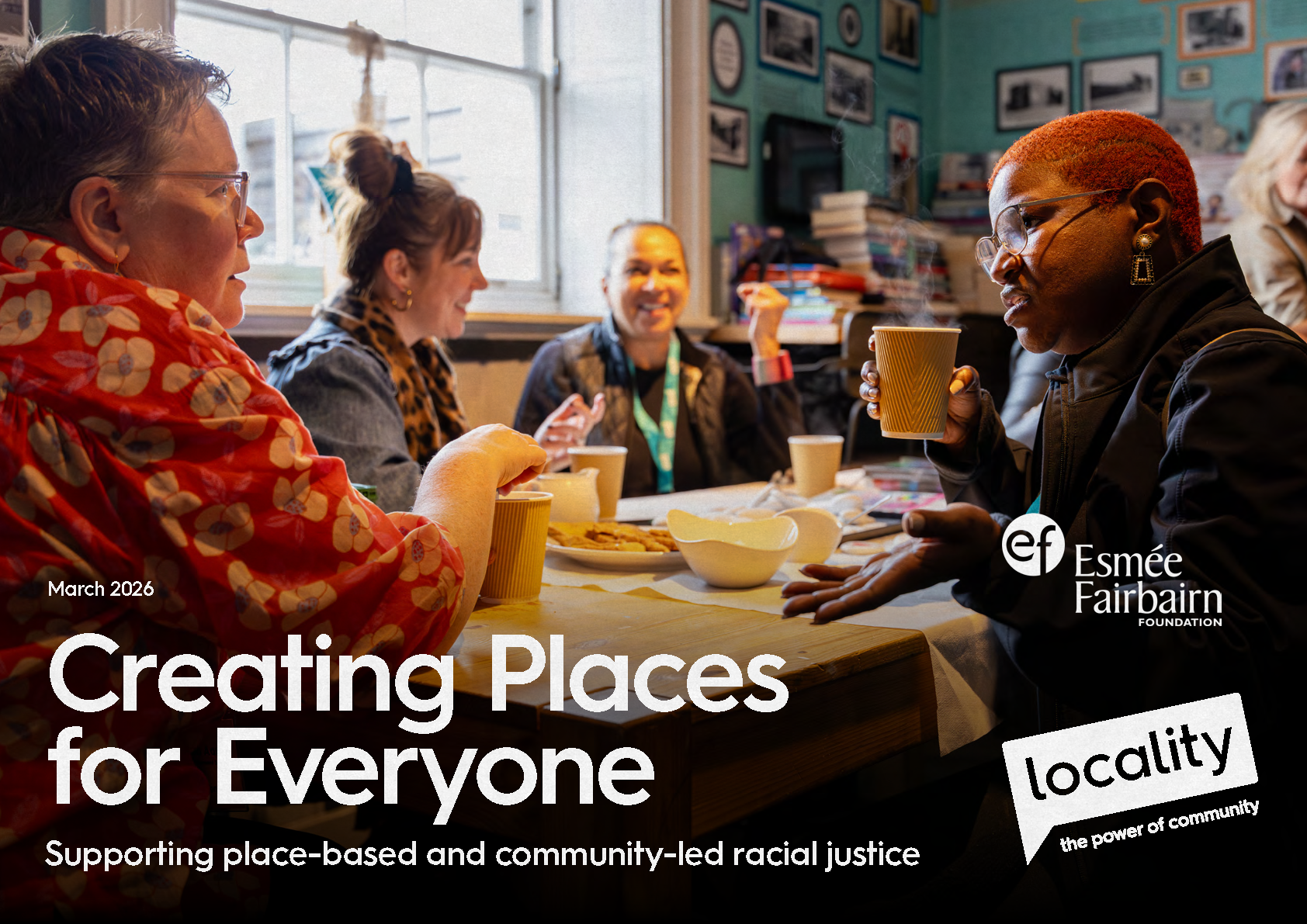
Read Locality's new report
This report and action plan explain how social infrastructure created by and for racialised communities is crucial for this. Locality's action plan sets out how they will put this into practice, building their developing organisational commitment to anti-racism into a clear, practical support offer for their members.