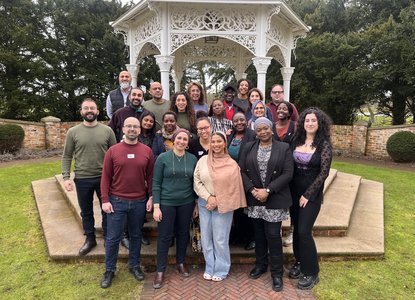
The annual RACE (Racial Action for the Climate Emergency) Report shares findings on the racial diversity of environment organisations and funders. As well as giving an overview of the sector, it also identifies a series of actions organisations can take to track and make progress to improve their diversity.
Published last week, the 2025 RACE Report is an important reminder of how far we still need to go, as well as a call to action with practical steps organisations can take towards strengthening diversity, equity and inclusion (DEI).
Whilst the latest findings show that the environment and conservation sector still lags behind the UK average in terms of racial diversity in the workplace (4.7% compared to 17%), there are also signs of momentum. Of the 91 organisations who have submitted data each year since it began, which includes Esmée, the proportion of staff who identify as people of colour compared to the previous year increased from 6.2% in 2022 to 8.4% in 2025. This group of organisations also saw the biggest increase in actions implemented from those the Report has identified and tracks.
Reflections on our role as a funder
As a long-time social and environmental justice funder, we know how important the RACE Report is. We only want to fund organisations that recognise their responsibility to ensure that the environment movement is more representative of wider society and the commitment to transparency and improvement that comes with engaging with the RACE Report is one way they can demonstrate this commitment. At a time when political and media narratives can be hostile to those on the front line of efforts to improve diversity and inclusion, the RACE Report provides the hard data that shows why this work is still necessary.
The RACE Report has also helped to direct our efforts. Reflecting on data in the last RACE Report with colleagues across the sector led us to explore what more we could do to support aspiring Global Majority leaders. A link to more information about this work is below.
We know that progress is not easy – as an organisation, there’s far more we need to do and we’re committed to learning, listening and improving. As a funder, we’re also committed to helping those we fund to improve DEI within their organisation; for instance, they can apply for additional support for help developing and implementing diversity, equity and inclusion practices through our Funding Plus offer. We are also keen to understand what more we can do to support greater diversity in the environment sector workforce. This includes:
- Supporting work to reimagine leadership in the environment sector, which has been led by Makani Cambridge and Common Purpose, and co-designed with a cohort of current and aspiring Global Majority leaders. See a report and webinar we hosted to learn more.
- Continuing to proactively find and fund organisations that are led by communities experiencing racial inequity (or ‘led by’ orgs in general – learn more about how we define led by); as well as committing to inviting led by orgs who submit an expression of interest towards our funding priorities in Our Natural World to an assessment call.
- Continuing to use our influence to support change in the environment sector through initiatives such as the RACE Report.
Esmée Fairbairn Foundation’s Transparency Card
As with previous years, the RACE Report shares a Transparency Card for each participating organisation with their organisation’s diversity data along with progress on key areas including strategy, governance and HR. Esmée's Transparency Card is below.
Of the 38 recommended actions organisations can take to improve DEI, we saw a significant increase in the number that are now either in progress or have been fully implemented (61% compared to 50% in 2024). Changes we made include fully implementing a regular review of DEI activities and creating a safe space for staff who identify as people of colour to connect. We have also improved our wellbeing support for staff with tailored sessions for people of colour.
We know that representation is not enough and, working with staff, we want to develop a culture of care at Esmée. Feedback from staff surveys as well as work on supporting lived experience in the workplace have highlighted how fostering a sense of belonging and care are essential to addressing systemic inequity.
You can find more information about the diversity of Esmée’s people in a separate blog. It covers a broader range of categories including socioeconomic background. We also shared an analysis of our pay gap data along with actions we are taking to address this.
To learn more about our DEI commitments and actions taken so far, visit our Diversity, Equity and Inclusion page.