New Connections supports 20 organisations working for racial or migrant justice in the UK across the arts, community, environment and social justice sectors. As the learning Network comes to a close, we are sharing useful insights for funders and infrastructure organisations who are looking to support grassroots and founder-led organisations.
On this page
We gave New Connections organisations £2m in grants over 3 years, including £10k each to enable them to take part in the Network. 15 organisations also accessed Esmée’s Funding Plus offer, which provides up to £9k for capacity building consultancy, training or wellbeing support.
A report from Do it Now Now, who facilitated the Network for New Connections, shares the reflections and experiences of the people who took part, as well as findings from training sessions, residentials, wellbeing support and survey data.
In the blog below we share reflections from Esmée staff and from learning conversations with the organisations - summarised by Gina Crane, Director of Communications and Learning, and Nilima Banerji, Climate and Diversity, Equity and Inclusion Coordinator.
Esmees key findings
Esmée’s key findings
Working with organisations through New Connections has shown us that there is a wealth of potential and impact in smaller, grassroots organisations, and that they can play a key role in our strategy. However, it also showed us that Esmée Fairbairn Foundation is not currently well set up to give organisations like these the support they need. We will take many lessons from the New Connections programme into our grant-making but we have learned that, instead of doing this ourselves, we need to put time and money into working with partners who have more expertise in supporting grassroots groups.
Our recent Gender Justice report also recommends that we “find ways to reach smaller organisations who have a high degree of credibility within communities, potentially through re-granters.” We are currently supporting Baobab Foundation, Movements Trust, Comic Relief’s Global Majority Fund, Civic Power Fund, Project Tallawah, Black Feminist Fund, and the Alliance for Youth Organising. In 2026 we will look to continue our support to grassroots organisations through these partners in each of our three Aims.
Do it now now
Do it Now Now’s key findings
Working with Do it Now Now showed us the power of partnering with an expert organisation that understands founders and grassroots organisations, especially those led by communities experiencing racial inequity. By holding the space with care, Do it Now Now helped New Connections organisations to share the reality of the tokenism and shifting funder priorities that often leave them vulnerable, built a network of peer support, and made sure that the network’s insights were used to advocate for change in the funding system.
Do it Now Now’s report shares what was learnt through New Connections and what this means for the future of equitable, trust-based funding at Esmée Fairbairn Foundation. We recommend that funders including Esmée read, reflect, and act on their findings.
Key learning for equitable grantmaking:
- Funding as Capacity-Building: The provision of flexible, core funding was not merely a financial transaction but the essential first step in a capacity-building intervention. It granted leaders the "bandwidth" to engage in strategic learning, plan for the long term, and prioritise their wellbeing.
- Wellbeing is Foundational to Impact: The overwhelming feedback on the Wellness Retreat and wellbeing sessions underscored that leader sustainability is a prerequisite for organisational sustainability. Funder support must recognise and resource the human cost of driving social change in marginalised communities.
- Trust is Built through Redistributed Power: The most transformative moments occurred when power dynamics were deliberately inverted, during the co-design sessions, the Wellness Retreat, and especially the final advocacy dialogue. Authentic partnership requires funders to establish mechanisms for accountable listening and to act on feedback.
- “Missing Middle” Organisations are High-Impact Partners: The cohort, predominantly CICs and small teams led by people of colour, demonstrated exceptional strategic alignment with Esmée’s goals and a capacity for systems change. Their legal structures are often a pragmatic choice for agility and community accountability, not an indicator of lower capability or impact.
Changes at Esmee
What has New Connections helped to change at Esmée?
Governance rules
- In September 2025 we amended our application criteria for governance to include different legal and governance structures, beyond the charity model.
- Instead of requiring all applicants to have three directors (the majority unpaid), we are open to funding different kinds of organisations as long as they have a written constitution and have measures in place to guard against disproportionate personal benefit.
- We also want to see evidence of good governance. For smaller or newly formed organisations that have a sole director, we’ll want to understand how they manage risk and responsibility.
- It will still be unusual for us to fund organisations with one director and, should the scale of the work grow, we would want to see additional governance in place including further independent directors or a board, over time.
Who we fund
- New Connections has been part of moving funding to more organisations led by and for communities experiencing racial inequity across our strategy. In 2025, 23.4% of grants (£11m) went to organisations led by communities experiencing racial inequity, up from 20.3% in 2024 (£7.8m), and 23.1% in 2023 (£9.6m).
- Organisations funded through New Connections are currently in receipt of three years of core funding. We will make further grants to the organisations that are the best fit for our strategy, with four funded so far.
- We have increased the number of smaller or grassroots organisations we fund (in addition to New Connections) from four in 2022 to ten in 2025. However, we still think that our role in the funding ecosystem is most valuable as a mid-level funder, rather than a grassroots funder, so we do not plan to change our minimum turnover limit of £100k.
- We invite applications from smaller or newer organisations working in areas where we are looking for specific impact for our strategy, e.g. Seascapes, Blue spaces, racial equity in the environment sector, but the majority of our grants are medium / large-scale, supporting core costs over 3-5 years.
Our funding practice
- We are more ambitious for organisations like those funded through New Connections – being bolder and backing their potential.
- We have a better understanding of the pressures and challenges faced by organisations led by and for different communities experiencing racial inequity.
- We think more about being transparency, honesty, and accountability in everyday funding practice, including reflecting on how organisations might experience and interpret what we say and do.
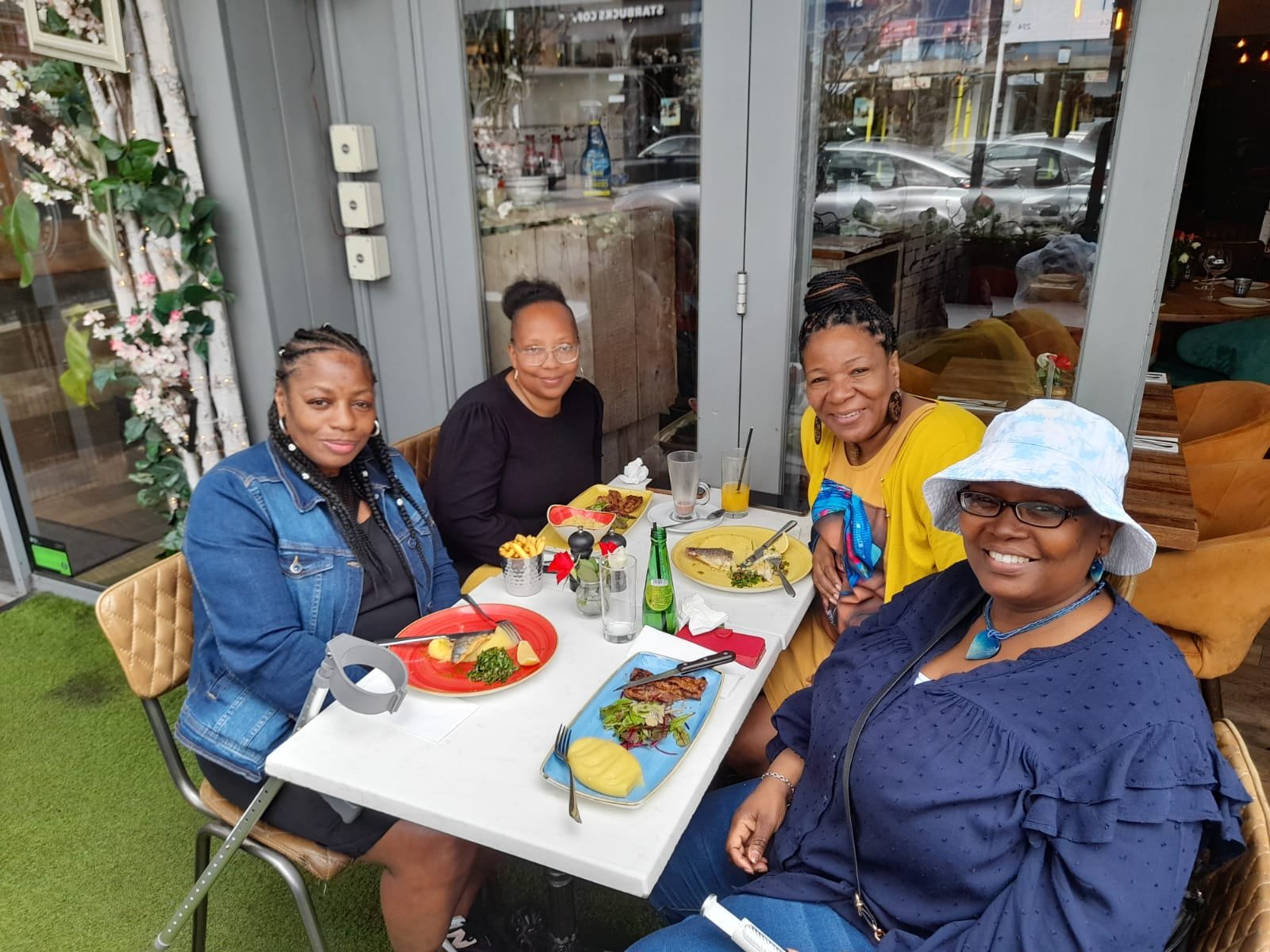
Credit: Families in Harmony
Learnings from New Connections
What has Esmée learned from New Connections?
Funding smaller organisations can make a big impact
- New Connections enabled us to fund high‑impact organisations that desperately needed core funding, that we would not have been able to support through our main fund.
- Funding was transformational for some smaller organisations and enabled leaders to focus on the communities they support, and to influence others beyond their immediate network.
- It was invigorating and uplifting for us to work with new types of organisations, and conversations about impact felt real and relatable. It was helpful to link grassroots work to larger scale campaigning work we are funding.
Smaller “led by” organisations are often exploited by larger ones
- Small organisations do a huge amount of work without being paid for it. Staff and volunteers – particularly those with lived experience of the issues they are working to tackle – are at high risk of burnout.
- The expertise and connections of grassroots groups is valuable, and this value needs to be better recognised by funders.
- The work of smaller organisations is often leveraged by larger organisations that are better positioned to secure funding. Having their ideas taken was a universal experience amongst New Connections organisations.
Shifting power in small ways opens the door for bigger conversations
- Dropping application and governance rules showed that we were listening to criticism of the funding system and responding by trying something different.
- The open, co-created format of the Network opened Esmée up to learning and to criticism – it was good to have organisations challenge us and to have to respond.
- We met and talked with people who were keen to challenge the funding system, pushing us to articulate and justify our role within it.
Working across our whole strategy can help make progress towards racial justice
- New Connections grants meet our commitment to identify, fund, and nurture smaller organisations led by and for communities experiencing racial inequity that are working towards our impact goals.
- By funding organisations across our whole strategy, we learned more about how racial justice intersects with our funding priorities, e.g. environmental action or the care system.
Stripping back application processes can make us more accountable
- Opting not to run an open application process saved time for the sector.
- Lack of competition meant the process was more relational and honest, with less pressure on the applicant.
- Sharing funding recommendation documents with organisations before the decision was made was transparent and has since influenced Funding Managers to write them differently.
- The organisations we funded were already on Esmée’s radar in some way, with many similar organisations unable to access the funding.
- The process took more time and capacity for Esmée, and resulted in a few gaps in data e.g. DEI data, outcomes and indicators.
Working without fixed funding processes can be less clear for everyone
- The process of finding organisations wasn’t clear enough to those we approached.
- The grant offer and expectations of participation in the Network - communicated first through conversations and followed up in writing - were not well understood.
- Funding Managers needed to work in a different, more relational way to support organisations, which emerged as the programme progressed.
- Different interpretations of the purpose and scope of the programme persisted internally, despite best efforts with communications.
- Expectations from New Connections organisations around the advocacy element of the programme – particularly for opportunities to influence trustees and other funders – were not met.
Under-resourced organisations may choose not to engage with learning events
- Staff from New Connections organisations are underpaid, with many pulls on their time.
- It was hard to design a learning programme to meet the needs of organisations that are at different stages of development, in different sectors.
- As organisations were approached by Esmée, they did not opt in to a learning programme.
- A small group got a lot out of the Network, but half the members did not engage despite the £10k additional grant to support this.
Bringing organisations together through a shared identity may feel marginalising
- Being grouped into “New Connections” rather than funded through Esmée’s main fund meant that some organisations felt marginalised, rather than recognised as equals.
- Some organisations viewed membership of the Network as being treated as “less than”, rather than the supportive approach intended by Esmée.
Delivering a programme like this deserves real expertise
- There is clear need from organisations like the ones funded through New Connections for funding, wraparound support, and a peer network.
- Supporting start-ups and smaller organisations requires skills, experience, and a more relational way of working. This is not what the Esmée staff team is currently set up to do.
- The programme did not have the clear design or resourcing required to deliver it well. There are other funders or intermediaries in the sector that Esmée could work with to do this better.
Thank you
We want to thank every member of the New Connections network who has contributed their time, energy, knowledge, care, patience, and expertise to Esmée over the past two years. It has been a privilege to get to know you, and to hear your stories, worries, successes and insights. Thank you also to Do it Now Now – your honesty and willingness to challenge our practice has pushed us to make changes, and you have opened the space for New Connections organisations to speak honestly about the reality of the psychological and practical challenges they face. As a result of working together, we are all better able to advocate for changes in the funding system.


